
Food and catering work often needs stock kept at temperature somewhere between a fixed cool room and a moving vehicle – a market stall, a catering job, a delivery run, or an event that lasts longer than a chiller bin can manage. A fridge or freezer trailer closes that gap. Every trailer on this page stays under 3,500kg ATM, so it’s towable on a standard car licence behind the vehicle already used for the job.
Why a Trailer-Based Cold Chain Works
Legal capacity for real stock volumes
On the Refrigerated Trailer 752 DK2, tare is 315 kg against a 750 kg ATM – 435 kg of legal payload for chilled stock, in a trailer that’s still towable on a car licence. See current fridge and freezer trailer specs.
Tow it with the vehicle you already own
Every trailer in this range sits under 3,500kg ATM – no refrigerated truck, no HR licence, no separate cold-chain vehicle on the books.
Moves with the job, not just to it
A fridge or freezer trailer stays on site for the length of a market, catering job or event, then tows straight back – unlike a fixed cool room, it doesn’t need to be emptied and refilled each trip.
Insulated panel construction built for the cycle
Constant temperature cycling between loaded and empty, indoors and out, is what these trailers are built for – the panel and door seal condition is what actually determines cooling performance years in, not how the unit looks new.
What Are You Moving?

Mobile Cold Storage
A fridge or freezer trailer sets up at a market, catering job or delivery run, then tows straight back, keeping stock at temperature the whole time.

Frozen Stock Transport
A dedicated freezer trailer holds stock below freezing for the full length of a job, not just while it’s connected to power.
Chilled Stock Delivery
A refrigerated trailer keeps stock at a set chilled temperature between pickup and delivery, without relying on ice or insulated boxes.

Dry Stock, Stalls and Market Equipment
Tables, marquees, non-perishable stock and packaging travel secure and dry in an enclosed trailer, kept separate from anything running on the refrigeration unit.
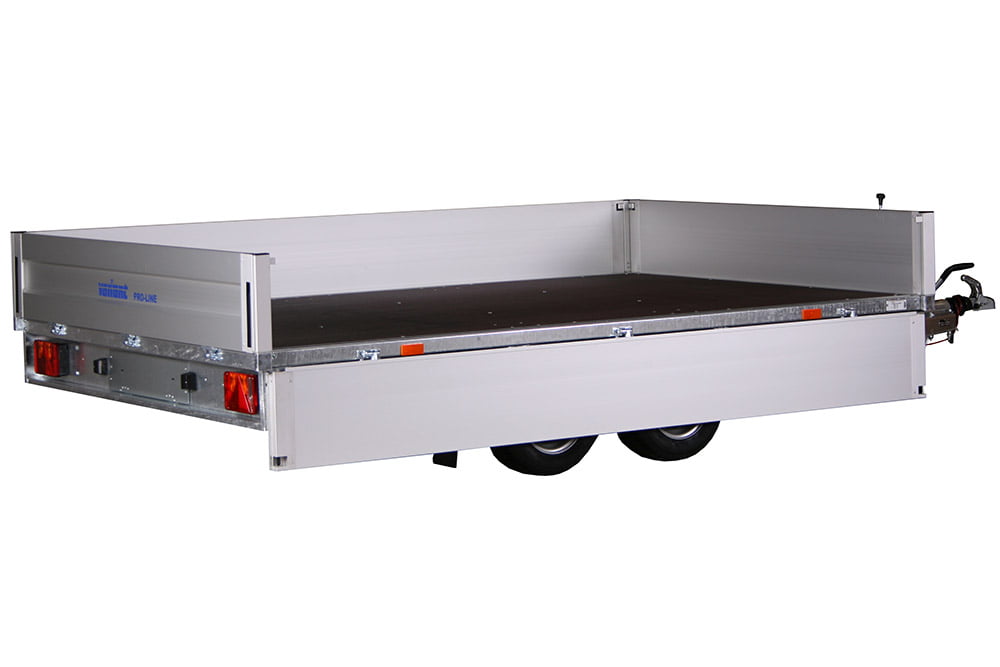
General Produce and Market Runs
Not every load needs refrigeration – a commercial box trailer covers produce, boxed stock and general market-run goods that don’t need to stay cold.
How Food Businesses Use Them
The Market Stall and Catering Operator
Running a stall at a weekend market or a catering job at a private venue means stock needs to stay at temperature for hours, often with no power connection guaranteed on-site. A fridge trailer solves that – loaded and set at the depot, towed to the venue, and running independently for the length of the event before towing straight back. Staying under 3,500kg ATM means the trailer goes behind the same vehicle used to tow other stall equipment, with no separate refrigerated van needed. See fridge and freezer trailers.
The Small Frozen-Goods Delivery Run
A delivery run carrying frozen stock to several stops in a day needs the cold chain to hold from the first stop to the last, not just for the drive between them. A freezer trailer keeps stock below freezing for the whole run, including time parked and unloading at each stop, which an insulated van alone struggles with over a longer route. See freezer trailers.
The Mobile Food and Beverage Business
A mobile food or beverage operation moving between events needs chilled stock ready to serve the moment it arrives, not defrosting or warming up in transit. A refrigerated trailer holds set temperature from the depot to the event and through service, then tows back for restocking – one unit covering transport and on-site storage instead of two separate systems. See refrigerated trailers.
Load and Legality
ATM (Aggregate Trailer Mass) is the maximum legal weight of the trailer plus its load. Tare is the trailer’s own empty weight. Payload is what’s left over – ATM minus tare – and it’s the number that actually limits how much you can carry on a given trip. Every trailer on this page stays at or under 3,500kg ATM, which keeps it towable on a standard car licence, but ball weight, tie-down duty and your tow vehicle’s own towing capacity still need checking against the actual load. Work out payload and ball weight for a specific trailer and tow vehicle combination with the trailer load calculator, or read the trailer buying & compliance guide for ATM, GTM and braking rules in full.
Frequently Asked Questions
What’s the difference between a fridge trailer and a freezer trailer?
A fridge trailer holds a set chilled temperature above freezing, suited to produce and general chilled stock. A freezer trailer holds stock below freezing for genuinely frozen goods.
Do I need a special licence to tow a refrigerated trailer?
No, provided the trailer’s ATM is 3,500kg or under, which covers every trailer on this page – a standard car driving licence is enough.
Can a fridge trailer run without being plugged into mains power?
Yes – these units are built to run independently once loaded and set, which is what makes them useful at a market stall or event site without a guaranteed power connection.
How much stock can a lightweight refrigerated trailer carry?
It depends on the specific model. As an example, the Refrigerated Trailer 752 DK2 has a 750kg ATM, 315kg tare and 435kg payload. Check the exact figures for any model on its own product page.
What’s the benefit of a fridge trailer over a fixed cool room for events?
A fridge trailer moves with the job – it tows to the venue, runs for the length of the event, and tows straight back, rather than requiring stock to be transported separately to and from a fixed cool room.
Do I need a refrigerated trailer for every food business delivery?
No – only for stock that needs to stay chilled or frozen in transit. Non-perishable stock, stalls and packaging travel fine in an enclosed or commercial box trailer, saving the fridge unit’s capacity for what actually needs it.
Get a Quote
Talk to A2B Trailers about which of these trailers suits your business, or enquire about finance on a new trailer.
Finance options: view finance · Phone: (02) 4367 0026
