
Launching and retrieving a boat is a two-part job – getting the hull to the water safely, then getting it back onto the trailer against wind, current and a ramp that isn’t always ideal. A trailer matched to the hull and matched to the way it’s actually used at the ramp makes both ends of that job easier. Every trailer on this page stays under 3,500kg ATM, so it’s towable on a standard car licence behind the tow vehicle already used for the boat.
Why the Right Trailer Wins at the Ramp
More payload inside the same limit
A lighter tare means more of the ATM is available for the hull, motor and gear. On the Boat Trailer Ocean 451, tare is 108 kg against a 450 kg ATM – 342 kg of legal payload. See current boat trailer specs.
Tow it with the vehicle you already own
Every trailer in this range sits under 3,500kg ATM – no truck, no HR licence, no separate tow vehicle just for boat transport.
Launch and retrieve without a second pair of hands
Rollers positioned for the hull shape and an adjustable bow support mean less physical effort lining up and winching on at the ramp, particularly solo.
Built for constant water exposure
A boat trailer goes in and out of fresh or salt water more than almost any other trailer type. Frame and roller condition at the five-year mark comes down to build quality against that exposure, not how the trailer looked new at the yard.
What Are You Moving?
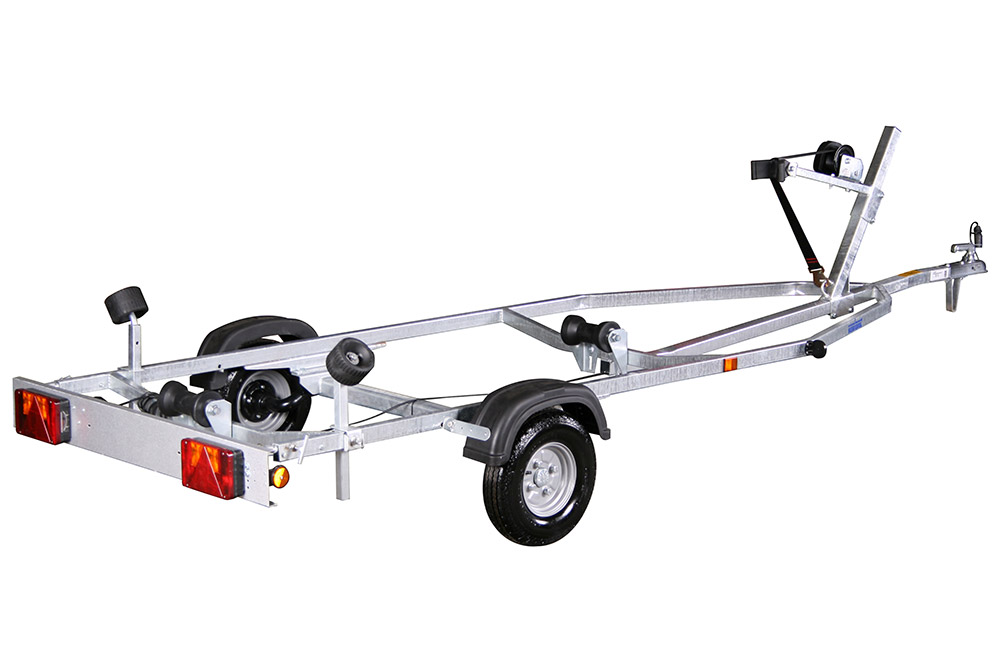
General-Purpose Boat Transport
A boat trailer matched to the hull means less time lining up at the ramp and more time on the water – load once at home, launch once at the ramp.
Regular Ramp Use
The Ocean Series is built for frequent ramp use, with rollers and support positioned for a straightforward, repeatable launch and retrieve.

Heavier Hulls
The Super Roller Series eases heavier hulls on and off with less physical effort at the water’s edge, suited to bigger boats within the 3,500kg ATM limit.

Gear, Safety Equipment and Storage Between Trips
Life jackets, fishing and dive gear stay dry and secure between trips in an enclosed trailer, rather than being loaded and unloaded from the tow vehicle every outing.
How Marine and Boating Operators Use Them
The Solo Weekend Boat Owner
Launching and retrieving without a second person on hand is the main challenge for a lot of boat owners, especially on a busy ramp where there’s pressure to move quickly. The Ocean Series is built around this – rollers and an adjustable bow support line the hull up with less physical effort, so retrieval doesn’t turn into a wrestling match against the current. Staying under 3,500kg ATM means the trailer tows behind a standard car or 4WD, no upgrade needed. See the Ocean Series.
The Charter or Hire Boat Operator
A boat used for charter or hire work goes in and out of the water more often than a private vessel, and downtime for trailer repairs costs bookings. A trailer built for constant water exposure – corrosion-resistant frame, properly sealed bearings – holds up to that cycle better than a standard-duty unit, keeping the boat in rotation instead of in the workshop. See boat trailers.
The Heavier Hull Owner
A larger runabout or cabin cruiser puts more weight and more leverage through the trailer at the ramp, particularly on retrieval when the hull is still carrying some water. The Super Roller Series is built for that heavier class of hull, with rollers positioned to ease the load on and off rather than requiring it to be winched the last stretch by brute force, while still sitting under 3,500kg ATM for standard-licence towing. See the Super Roller Series.
Load and Legality
ATM (Aggregate Trailer Mass) is the maximum legal weight of the trailer plus its load. Tare is the trailer’s own empty weight. Payload is what’s left over – ATM minus tare – and it’s the number that actually limits how much you can carry on a given trip. Every trailer on this page stays at or under 3,500kg ATM, which keeps it towable on a standard car licence, but ball weight, tie-down duty and your tow vehicle’s own towing capacity still need checking against the actual load. Work out payload and ball weight for a specific trailer and tow vehicle combination with the trailer load calculator, or read the trailer buying & compliance guide for ATM, GTM and braking rules in full.
Frequently Asked Questions
What trailer suits launching and retrieving without a second person?
The Ocean Series is built for regular, solo-friendly ramp use, with rollers and bow support positioned to reduce the physical effort of lining up the hull. See the Ocean Series.
What’s the difference between the Ocean Series and the Super Roller Series?
The Ocean Series suits regular ramp use for standard hulls. The Super Roller Series is built for heavier hulls, easing them on and off with less physical effort at the water’s edge.
Do I need a special licence to tow a boat trailer?
No, provided the trailer’s ATM is 3,500kg or under, which covers every trailer on this page – a standard car driving licence is enough.
How much can a lightweight boat trailer carry under 3,500kg?
It depends on the specific model. As an example, the Boat Trailer Ocean 451 has a 450kg ATM, 108kg tare and 342kg payload. Check the exact figures for any model on its own product page.
What size boat does a Super Roller Series trailer suit?
It’s built for heavier hulls than the standard Ocean Series, while still staying under the 3,500kg ATM limit for standard-licence towing. Check individual model specs on the Super Roller Series page.
Is there a trailer for marine gear and safety equipment, not just the boat?
Yes – an enclosed trailer keeps life jackets, fishing and dive gear dry and secure between trips, separate from the boat trailer itself. See enclosed trailers.
Get a Quote
Talk to A2B Trailers about which of these trailers suits your business, or enquire about finance on a new trailer.
Finance options: view finance · Phone: (02) 4367 0026
